Hellraisers Journal: International Socialist Review: “Bishop Spalding and Socialism” by A. M. Simons, Part II: The Capitalist System

Share

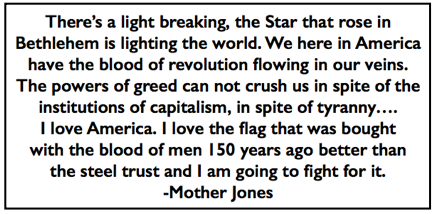
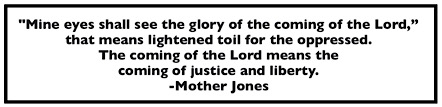
Quote Mother Jones, Coming of the Lord, Cnc Pst p6, July 23, 1902—————

Hellraisers Journal – Sunday January 18, 1903
“Bishop Spalding and Socialism” by Editor Algie M. Simons

From the International Socialist Review of January 1903:

Bishop Spalding and Socialism.*
[by A. M. Simons]
—————

[Part II of II]

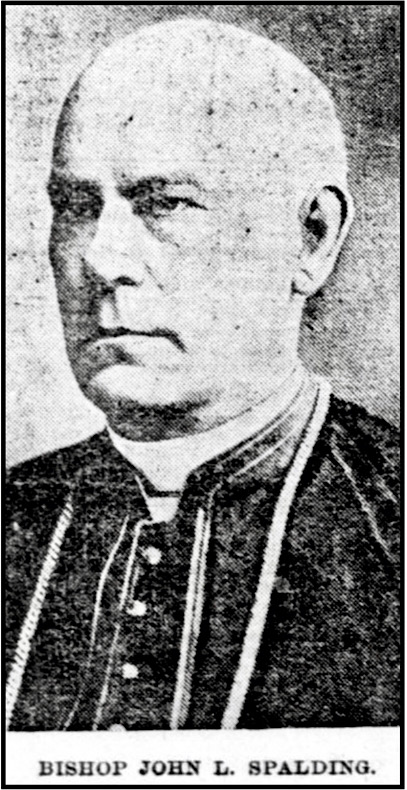
Bishop Spalding, Colfax WA Gz, p5, Nov 28, 1902

Again, in [Bishop Spalding’s] recognition of the class character of our present law, he comes very close to Socialism. Speaking of punishment for crime, he says:

The delinquents who are incarcerated are chiefly the poor, who had they money to pay the fines would escape punishment. The heaviest punishment is inflicted on the most helpless, and frequently on the least guilty; and thus the morally weak, the victims of unfortunate environments, are degraded, hardened, and made habitual offenders.

I do not wish to push the matter too far and to ascribe too great a comprehension of or favorable attitude towards Socialism on the part of Bishop Spalding. But on page 58 we see some thing that reads very like a description of the rise of proletarian class consciousness. He says:

The laborers, who in proportion as their minds have been awakened, have become conscious of the hardships and limitations to which they are subject, feel this more keenly than any other class, and hence they have formed in numerable organizations to protect their rights and promote their interests.

Finally, we would seldom find a harsher indictment against the capitalist system than is to be found on pages 173 and 174:

The political and social conditions which involve the physical deterioration and the mental and moral degradation of multitudes are barbarous, and unless they are improved must lead to the ruin of the State. From this point of view, which is the only true point of view, our present economic and commercial systems are subversive of civilization. They sacrifice men to money; wisdom and virtue to cheap production and the amassing of capital. They foster greed in the stronger and hate in the weaker. They drive the nations to competitive struggles which are as cruel as war, and in the final results more disastrous; for their tendency is to make the rich vulgar and heartless, and the poor reckless and vicious. As stratagems and lies are considered lawful in war, so in the warfare of commercial competition opinion leans to the view that whatever may be done with impunity is right. The adulteration of food and drink, the watering of stocks, the bribing of legislators, the crushing of weaker concerns, the enforced idleness of thousands, who are thereby driven to despair and starvation, are not looked upon as lying within the domain of morals, any more than the shooting of a man in battle is considered a question of morality. The degradation and ruin of innumerable individuals are implications of the law of competition, just as in the struggle for existence there is a world-crushing and destruction of the weak by the strong.
Continue reading “Hellraisers Journal: International Socialist Review: “Bishop Spalding and Socialism” by A. M. Simons, Part II: The Capitalist System”

Hellraisers Journal: International Socialist Review: “Bishop Spalding and Socialism” by A. M. Simons, Part I: The Laboring Classes

Share

Quote Mother Jones, Coming of the Lord, Cnc Pst p6, July 23, 1902—————

Hellraisers Journal – Saturday January 17, 1903
“Bishop Spalding and Socialism” by Editor Algie M. Simons

From the International Socialist Review of January 1903:

Bishop Spalding and Socialism.*
[by A. M. Simons]
—————

[Part I of II]

Bishop Spalding, Colfax WA Gz, p5, Nov 28, 1902

OWING to the prominence which Bishop Spalding has attained in the recent coal strike and in other matters relating to labor, his recent book on Socialism and Labor is worthy of more attention than it might otherwise merit. But the book itself is well worthy of examination. The introductory paragraphs are, on the whole, a very fair statement of the Socialist argument; and we therefore quote them at length:

The interest which all who think take in the laboring classes, whether it spring from sympathy or fear, is a characteristic feature of the age.

Their condition seems to be the great anomaly in our other wise progressive and brilliant civilization. Whether when compared with the lot of the slaves and serfs of former times that of the laborer is fortunate, is not the question. He is not placed in the midst of the poverty and wretchedness of a rude and barbarous society, but in the midst of boundless wealth and great refinement. He lives, too, in a democratic age, in which all men profess to believe in equality and liberty; in an age in which the brotherhood of the race is proclaimed by all the organs of opinion. He has a voice in public affairs, and since laborers are in the majority, he is, in theory, at least, the sovereign. They who govern profess to do everything by the authority of the people, in their name and for their welfare; and yet, if we are to accept the opinions of the Socialists, the wage-takers, who in the modem world are the vast multitude, are practically shut out from participation in our intellectual and material inheritance. They contend that the poor are, under the present economic system, the victims of the rich, just as in the ancient societies the weak were the victims of the strong; so that wage-labor, as actually constituted, differs in form rather than in its essential results from the labor of slaves and serfs. And even dispassionate observers think that the tendency of the present system is to intensify rather than to diminish the evils which do exist; and that we are moving towards a state of things in which the few will own everything, and the many be hardly more than their hired servants. In America they admit that sparse population and vast natural resources that as yet have hardly been touched helped to conceal this fatal tendency, which is best seen in the manufacturing and commercial centers of Europe, where the capitalistic method of production has reduced wage-earners to a condition of pauperism and degradation which is the scandal of Christendom and a menace to society.

The present condition of labor is the result of gradually evolved processes, running through centuries.

The failure of the attempt of Charlemagne to organize the barbarous hordes which had overspread Europe into a stable empire was followed by an era of violence and lawlessness, of wars and invasions, from which society sought refuge in the feudal system. The strong man, as temporal or spiritual lord, was at the top of the feudal hierarchy, and under him the weak formed themselves into classes. The serf labored a certain number of days for himself, and a certain number for his lord. In the towns the craftsmen were organized into guilds which protected the interests of the members. The mendicant poor were not numerous, and their wants were provided for by the bishops and the religious orders.

Then the growth of towns and the development of trade and commerce brought wealth to the burghers, who became a distinct class, while domestic feuds and foreign wars, especially the Crusades, weakened and impoverished the knights and barons. The printing press and the use of gunpowder in war helped further to undermine the feudal power, while the discovery of America, the turning of the Cape of Good Hope, and the Protestant revolution threw all Europe into a ferment from which new social conditions were evolved. The peasants who had been driven from the land by the decay of the great baronial houses, and the confiscation of the property of the church, flocked into the towns or became vagabonds. The poor became so numerous that permanent provision had to be made for them, and poor laws were consequently devised.

The master-workman, who in the middle ages employed but two or three apprentices and as many journeymen, gave way to a class of capitalists, enriched by the confiscated wealth of the church, by the treasures imported from America and the Indies, and by the profits of the slave traffic, who at once prepared to take advantage of the stimulus to industry given by the opening of a vast world market. As late as the middle of the last century, however, manufacturing was still carried on by masters who employed but a small number of hands, and had but little capital invested in the business; and the modern industrial era, with its factory system, properly begins with our marvelous mechanical inventions and the use of steam as a motive power. Machinery made production on a large scale possible, and threw the whole business into the hands of the capitalists, while laborers are left with nothing but their ability to work, which they are forced to sell at whatever prices it will bring.

Continue reading “Hellraisers Journal: International Socialist Review: “Bishop Spalding and Socialism” by A. M. Simons, Part I: The Laboring Classes”

Hellraisers Journal: The Coming Nation: Photographs by Lewis Hine: “And after a few years in the steel mills…..”

Share

Quote Mother Jones, Revolution in Our Veins, Altoona Tb p6, Jan 12, 1920—————

Hellraisers Journal – Wednesday January 15, 1913
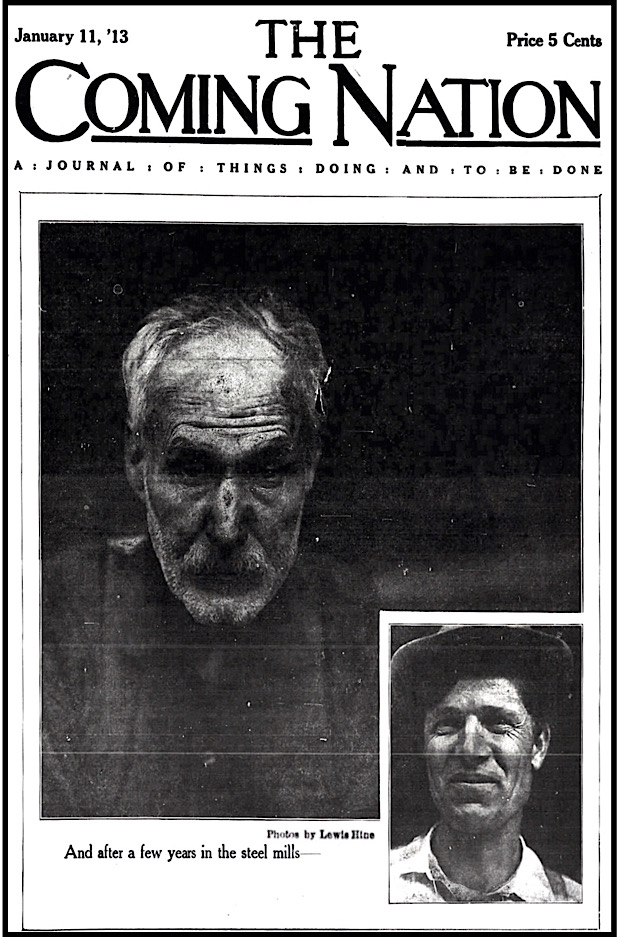
“After a few years in the steel mills…..” by Lewis Hine

From The Coming Nation of January 11, 1913:

Lewis Hine, Steel workers after a few years in steel mills, Cmg Ntn Cv, Jan 11, 1913

Continue reading “Hellraisers Journal: The Coming Nation: Photographs by Lewis Hine: “And after a few years in the steel mills…..””

Hellraisers Journal: West Virginia Governor Pardons Many Miners Convicted by Military Court During Occupation of Strike Zone

Share

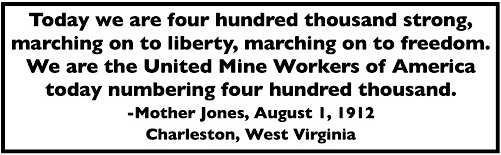
Quote Mother Jones, UMW Strong, Speech Charleston WV Levee, Aug 1, 1912—————

Hellraisers Journal – Tuesday January 14, 1913
Charleston, West Virginia – Glasscock Pardons Miners Convicted by Military Court

From The Fairmont West Virginian of January 13, 1913:

GOV. GLASSCOCK PARDONS MANY MINERS
—————

MEN CONVICTED BY MILITARY COURT ARE
PARDONED BY THE GOVERNOR.
—————

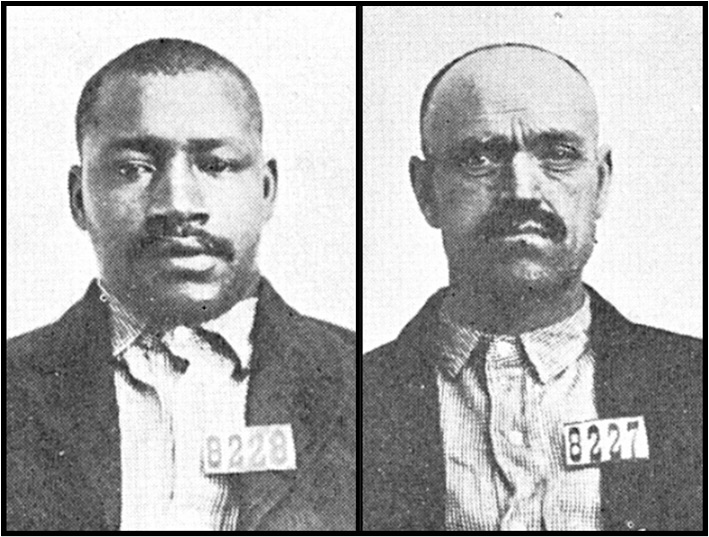
WV Dan Chain n SF Nantz, Sent to Moundsvil Pen Nov 21, 1912
Dan Chain and S. F. Nantz Sent to Moundsville Prison
on Nov 21, 1912

CHARLESTON, W. V., Jan. 13.-That Governor Glasscock has issued conditional pardons clearing the State penitentiary of all persons convicted by the military court during the recent occupation by martial law of part of Cabin and Paint Creek became known last night when 12 convicts having sentences ranging from one to seven one-half years, were allowed to take freedom from the walls of the State prison at Moundsvllle by the pardon board of January 3, but were for some reason held up until Saturday.

The greatest secrecy was maintained concerning the governor’s action. Not one of the 80 persons convicted under martial law remains in prison, many having been pardoned heretofore and a few having served their sentences. Of the 12 released Saturday 11 are miners convicted of conspiracy or similar crimes under the second occupation of martial law. Much rejoicing was occasioned in the strike zone Saturday night when it became known that the convicts had been pardoned. Troops were withdrawn from the strike zone December 12, and beginning the day after Christmas all guns taken from the residents of the martial law districts except high power rifles were ordered returned. Hundreds of miners have received their guns.

Last Wednesday night there was an outbreak of strikers on Paint creek when a freight train crew was fired upon and a mine set on fire. Farther trouble is expected in the strike zone.

Of those released Saturday, Shanklin was a mine guard and was sentenced during the first part of martial law rule. All the others were miners. Those released were the following: S. Frank Nance, five years; J. R. Shanklin, one year and $100; Dan Chain, five years; Charles Jarrel, two years; Newt Gump, five years; Rock Spinelli, five years; Angelo Billetlli, five years; Tony Stafford, five years; Grover Jarrell, three years; William Thompson, three years; Joe Raines, five years; Lawrence Cepreant, seven and one-half years.

George Book, serving a one-year sentence for malicious wounding in Logan county, was also pardoned.

[Photograph, emphasis and paragraph breaks added.]

Continue reading “Hellraisers Journal: West Virginia Governor Pardons Many Miners Convicted by Military Court During Occupation of Strike Zone”

Hellraisers Journal: Mother Jones Speaks in Washington, D. C., Scores Inhumane Treatment of West Virginia Coal Miners

Share

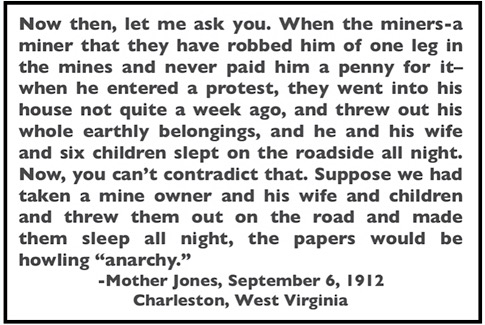
Quote Mother Jones, Howling Anarchy, Cton WV, Sept 6, 1912—————

Hellraisers Journal – Monday January 13, 1913
Washington, D. C. – Mother Jones Speaks on Behalf of West Virginia Miners

From the Washington Evening Star of January 11, 1913:

TELLS OF INHUMANITY
———-
“Mother” Jones Scores Treatment of
the West Virginia Coal Miners.
———-

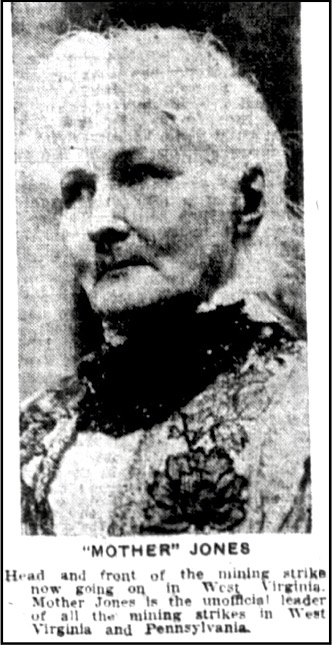
Mother Jones, NE State Jr p2, Sept 19, 1912

“Mother” Jones, the “angel” of the  United Mine Workers and a prominent figure in the coal mining regions for the last forty years, was the principal speaker at a meeting at National Rifles’ Armory last night, the meeting being held under the auspices of the Central Labor Union.

In her address Mother Jones pronounced conditions in the coal mining regions of West Virginia worse than that of the slaves in the darkest days of the antebellum period. She declared that she had seen twenty-one innocent men out of a party of thirty miners slain while they slept by a posse made up of deputy sheriffs and detectives, and that of her own knowledge women and children of striking miners had been thrown out of their cabins, in evil weather, by the hired officers of the mine owners and forced to seek shelter under trees and in eaves of the mountains, without food for four days and nights.

“Were these things to occur in Russia or Mexico,” declared Mother Jones, “the American people would rise up in protest, as they have done on several occasions, forcing Congress to take action to prevent further murders and violence.”

Representative W. B. Wilson of Pennsylvania, for many years a high official of the United Mine Workers, presided at the meeting, and declared that he knew personally that the things of which Mother Jones told were actually true. Other speakers were J. W. Brown of the U. M. W., and Frank Hayes, a vice president of that organization. Resolutions were adopted reciting at length the alleged conditions in the West Virginia coal fields and petitioning Congress to rectify them by adopting a pending of Representative Wilson’s calling for a thorough investigation.

[Photograph and emphasis added.]

Continue reading “Hellraisers Journal: Mother Jones Speaks in Washington, D. C., Scores Inhumane Treatment of West Virginia Coal Miners”

Hellraisers Journal: The Little Falls Textile Is Won; Strikers Accepted Offer of Mill Owners with Cheers at Large Mass Meeting

Share
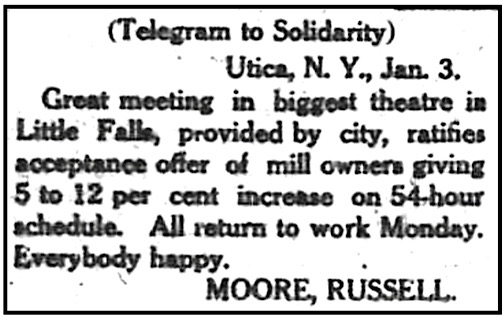
Telegram re Little Falls NY Strike Settle, Sol p1, Jan 11, 1913
-from Solidarity of January 11, 1913
—————

Hellraisers Journal – Sunday January 12, 1913
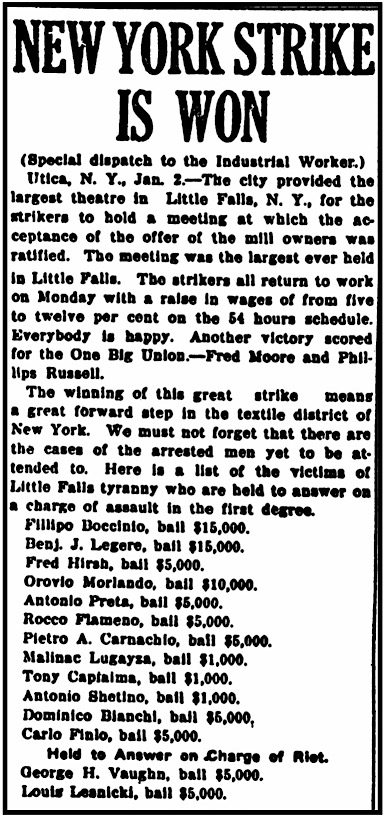
Little Falls Textile Strikers Celebrate Great Victory at Mass Meeting

From the Spokane Industrial Worker of January 9, 1913:

Little Falls Textile Strike Won, IW p1, Jan 9, 1913

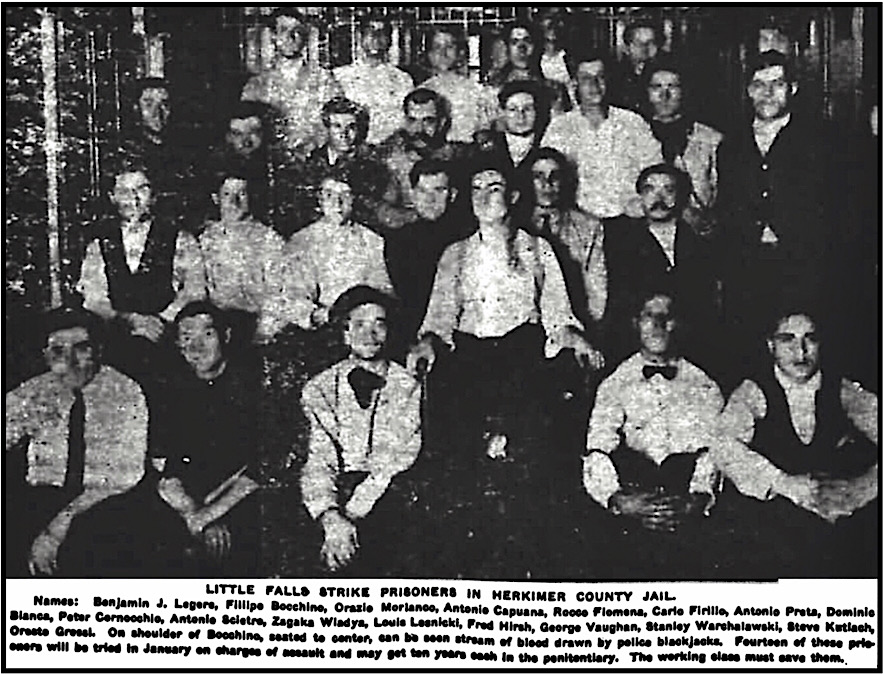
[Little Falls Strike Prisoners Remain at Herkimer County Jail]

Little Falls Strike Prisoners, IW p1, Jan 9, 1913

Continue reading “Hellraisers Journal: The Little Falls Textile Is Won; Strikers Accepted Offer of Mill Owners with Cheers at Large Mass Meeting”

Hellraisers Journal: Thirty-Three Union Men on Train to Leavenworth, Heavily Guarded; Ryan to Serve Seven Years

Share
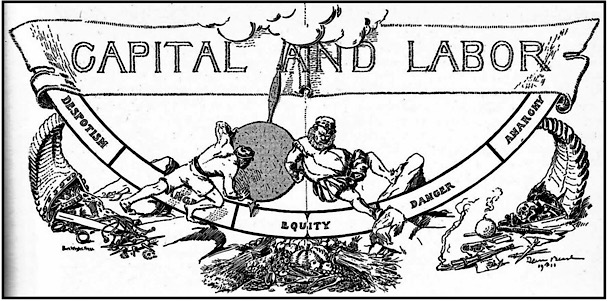
DRWG Capital n Labor Despotism Anarchy, Survey p607, Feb 1, 1913
From The Survey of February 1, 1913
—————

Hellraisers Journal – Saturday January 11, 1913
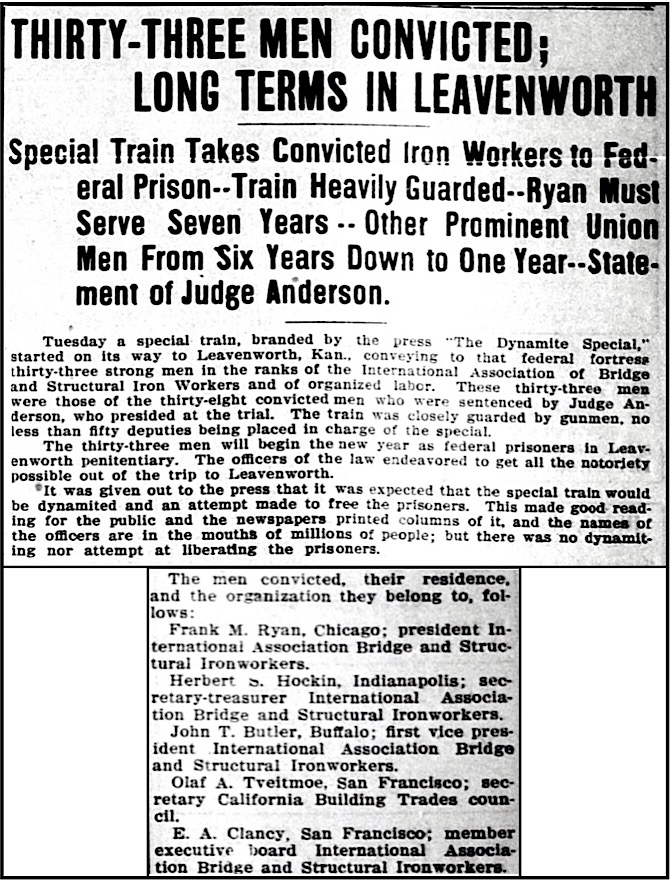
Leavenworth, Kansas – Heavily Guarded Train Carries Union Men to Prison

From the United Labor Bulletin of January 2, 1913:

HdLn 33 Labor Men to Leavenworth, Dnv Un Lbr Bltn p1, Jan 2, 1913

Note: Article continues with names, residences and organizations of other men transported to Leavenworth along with President Ryan, and continues further with remarks of Judge Anderson at sentencing.

Continue reading “Hellraisers Journal: Thirty-Three Union Men on Train to Leavenworth, Heavily Guarded; Ryan to Serve Seven Years”

Hellraisers Journal: Mass Protest Meeting Held in Wheeling; Mother Jones Speaks on Behalf of Striking West Virginia Miners

Share

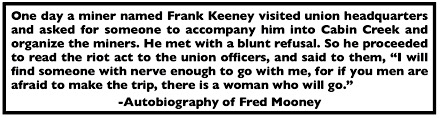
Quote Fred Mooney re Mother Jones at Cabin Creek Aug 6, 1912, Ab p27—————

Hellraisers Journal – Friday January 10, 1913
Wheeling, West Virginia – Mother Jones Speaks at Mass Protest Meeting

From The Wheeling Majority of January 9, 1913:

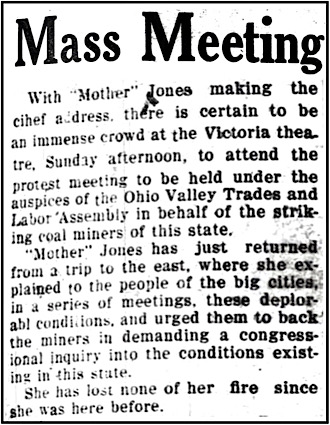
Protest Meeting Well Attended
———-

Mass Meeting Scheduled for Sunday w Mother Jones, Wlg Maj p1, Jan 2, 1913
The Wheeling Majority
January 2, 1913

The mass meeting held last Sunday afternoon to protest against the conditions being inflicted upon the striking miners of this state by heartless coal barons, and to insist upon a federal investigation of the coal mine industry in West Virginia was a great success. The Victoria theatre was crowded long before the hour for opening the meeting had arrived, and close attention was paid to the teaches and great interest shown on the part of the audience—an interest which proves that the working class is awakening to its own desires and that the days of inhuman exploitation in the coal mines of this state are numbered.

The meeting was held under the auspices of the Ohio Valley Trades & Labor Assembly, in behalf of the United Mine Workers of America, and T. J. Hecker, of the Assembly, called the meeting to order and introduced Harry P. Corcoran as chairman.

H. P. Corcoran Chairman.

Mr. Corcoran made a brief talk, explaining that the meeting was non-political and non-sectarian, and that it was held in the attempt to arouse public sentiment to demand a federal investigation of conditions in the West Virginia coal fields, and the passage of remedial legislation by the present legislature.

Marco Roman.

He introduced Marco Roman, international organizer of the United Mine Workers, who spoke briefly in Italian, giving a history of the present conflict.

Attorney Houston Speaks.

H. W. Houston, attorney for the Mine Workers, followed, stating that he was making an appeal from the supreme court of the state to the “Court of last resort—the people.” He reviewed the granting of political concessions in governments from the Magna Charta almost 700 years ago, and said that all these concessions would now be worthless until we abolished industrial slavery. Modern government, he said makes workers be good while it robs them. Courts are daily twisting old decisions in order to keep the workers in subjection. He cited the Hatters’ case, the Iron Workers case, and the Ohio county case where, before Judge Nesbitt, it was held that when workers combine and keep another fellow out, they must respond in damages, but when he asked if employers could be held if they combined to discharge men in malice and blacklist them he received no answer.

He said that Governor Glasscock established martial law while the courts were open, which is a violation of the state constitution. Then there were no jury trials, and no chance to cross examine witnesses. All the criminals of the state, he said, had never violated the basic law of the state as had Governor Glasscock. The military authorities used the words of Wellington to justify their deeds: “That martial law was the will of one man.”

The miner Nance [Silas Frank Nantz], whose case the supreme court refused to dismiss, was always an aggressive fighter for unionism and because of that he was arrested without warrant by the military authorities for an alleged offense committed eight days before martial law was established, and, although the penalty in law for the offense provided a maximum punishment of but one year in jail or $500 fine, he was sentenced to five years in the penitentiary. He quoted the opinion of the U. S. Supreme court in the case of Nance was not unanimous, even Judge Ira E. Robinson dissenting, saying: “I stand for constitutional law.” Attorney General Conley, also, refused to stultify himself by defending the state’s unwarranted action before the court.

Mother Jones.

“Mother” Jones was next introduced and spoke for nearly an hour in her accustomed vigorous style. She recited with much detail the horrors of the situation throughout the strike region. She stated that this fight had begun twelve years ago and told of the first meeting ever held. Contrary to general opinion, she said, she had not been in jail often, but had had that honor only once, when Judge Jackson put her in jail at Parkersburg.

When she came to West Virginia she had been working for the shop men on the Harriman lines, then on strike, and she came down to help the boys she knew. When she got here they told her that a stone wall was the dividing line in the Cabin Creek region and that no organizer was allowed behind the wall. She replied that no wall had ever been built by capitalist robbers high enough to keep her out and she proceeded to go in. And she had been in ever since, except when she came out, as she was out now, to tell the people of this state and country about the conditions that existed behind that wall.

Continue reading “Hellraisers Journal: Mass Protest Meeting Held in Wheeling; Mother Jones Speaks on Behalf of Striking West Virginia Miners”

Hellraisers Journal: IWW Organizer, Elizabeth Gurley Flynn, Speaks to Shirt Workers in Paterson, New Jersey

Share

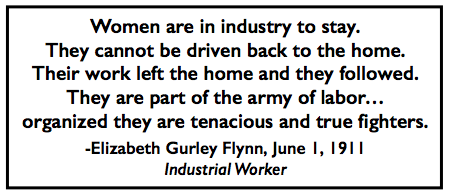
Quote EGF Organize Women, IW p4, June 1, 1911—————

Hellraisers Journal – Thursday January 9, 1913
Paterson, New Jersey – Elizabeth Gurley Flynn Speaks to Shirt Workers 

From The Paterson Evening News of January 7, 1913:

GIRL ORGANIZER ADDRESSED MEETING
OF SHIRT WORKERS
———-

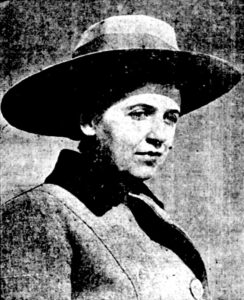
EGF, Bst Glb AM p1, Feb 13, 1912

Elizabeth Gurley Flynn a well known organizer in the ranks of the Industrial Workers of the World, last night addressed a gathering shirt workers at Helvetia hall. The purpose of the meeting was to affect a permanent organization of a union. 

Miss Flynn is a forceful speaker and her suggestions gained from much experience in the ranks of labor were listened to attentively. She dwelled on the eight-hour day movement, which she declared is general throughout the country, and laid importance on the shorter work day for the working girls and women. Following her address three hundred applications for membership were acted upon.

[Photograph and emphasis added.]

Continue reading “Hellraisers Journal: IWW Organizer, Elizabeth Gurley Flynn, Speaks to Shirt Workers in Paterson, New Jersey”