Hellraisers Journal – Tuesday April 6, 1920
Montesano, Washington – John Nicholas Beffel Observes Centralia Trial
From The Liberator of April 1920:
Fear in the Jury Box
[-by John Nicholas Beffel]
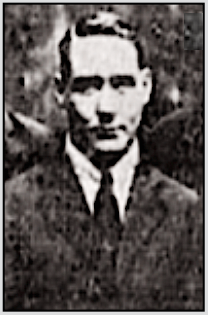
Eugene Barnett
A NERVOUS little man is on the witness stand in Montesano. He is James T. McAllister, whose wife owns the Roderick Hotel next door to the raided I. W. W. hall in Centralia. He testifies that one of the defendants, Eugene Barnett, was in the Roderick lobby all during the Armistice Day shooting and not in the Avalon Hotel, as the prosecution asserts.
“But when you were arrested you said there was nobody in the lobby,” says a prosecutor for the lumber trust. “Why did you say that?”
“I wasn’t sworn then,” replies the little man. “I didn’t want to be drawed into no trouble.”
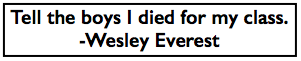
He cowers in his chair, remembering the mob. There was a list of people to be hung that night beside Wesley Everest.
“What’s the matter?” demands Vanderveer, counsel for the defense. “Are you afraid now?”
“N-no.” The little man shakes as with a chill.
Ten men sit facing the judge and jury and gallows. They are accused of killing Warren O. Grimm, service man, in the Armistice Day parade. But it is not a murder trial; it is a trial of organized labor; the lumber interests seek to crush their most dangerous enemy, the uncrushable I. W. W. The main legal issue is whether men still have a right to defend their lives and property against violence. If these ten workers get a fair trial and are judged solely by the evidence, they will without any doubt go free. But will the jury dare to acquit? A verdict of acquittal would mean ruin for the twelve. Each man’s history is known to the lumber trust; it knows how to break men; it has broken men before.
Hellraisers Journal – Monday April 4, 1910
Philadelphia, Pennsylvania – “When the Sleeper Wakes” by Joseph E. Cohen, Part II
From the International Socialist Review of April 1910:
—–
[Part II of II.]
On February 23rd, Mayor Reyburn dispatched a telegram to Governor Stuart, asking for the state constabulary, or cossacks, as they are more popularly known. Four companies of them, 158 men all told, arrived next day and remained until March 1st.
Now, the people of Philadelphia had no particular quarrel with the state constabulary. Their antipathy was confined largely to the transit company and its strike breakers. To fight against the cossacks meant to engage in bloody warfare, not with fists or bricks, but guns, and this the people were not prepared to do. Were it otherwise, the handful of cossacks would never have left Philadelphia alive. So, aside from a drubbing administered to a few of their number, they were permitted to depart in peace.
Hellraisers Journal – Sunday April 3, 1910
Philadelphia, Pennsylvania – “When the Sleeper Wakes” by Joseph E. Cohen, Part I
From the International Socialist Review of April 1910:
—–
[Part I of II.]
CHILD does not blossom into maturity in a day, nor can a weakling to transformed into a Hercules over night. It requires the lapse of many years in the one instance as in the other. And several decades may pass before a city or a nation attains its majority. Yet there is no telling for how long a time the elements have been gathering for some mighty upheaval; how soon, when the surface of things seemed as calm as ever, there would break out an eruption such as would rearrange all that seemed stable and permanent.
Philadelphia is the third city, in population, in America. It has its own peculiar makeup, fondles its own brand of conservatism and will have to work out its own method of salvation from the condition of “corruption and contentment” which has been ascribed to it.
It is a city of “magnificent distances.” That, of itself, explains a great deal, for solidarity and separation are usually antithetical, and Philadelphia is spread over such a wide territory, that people who work and live in Manayunk, Chestnut Hill, Germantown, Olney, Fox Chase, Frankford and Bridesburg—all within the city limits—come down to the center of the city much as country folk go “into town.” Many wage-workers in these localities have had no notion at all of what a trades union is. The seeds of class feeling were only beginning to be scattered among them, their outlook was for all the world, that of some fair sized village—not of the third city in America.
Hellraisers Journal – Monday April 2, 1900
Washington, District of Columbia – House Investigates Coeur d’Alene Troubles
From The Railroad Telegrapher of April 1900:
IDAHO’S DISGRACE.
—–
—–
THE investigation before the Committee on Military Affairs of the House of Representatives, with reference to the charges made against the United States soldiers under Brigadier General Merriam, growing out of the labor troubles in the Coeur d’Alene mining district in Idaho, has been creating intense interest in labor circles and elsewhere for some time past. Even those who are callous to labor’s wrongs and pin their faith to the theory that the survival of the fittest is the prevailing law in heaven as well as on earth and the other place, have felt some qualms of conscience that such things should happen in “The land of the free and the home of the brave.”
After a strike and some riotous proceedings, which latter could easily have been quelled by the local authorities, the Governor of the State [Frank Steunenberg] suspended the writ of habeas corpus, an infringement of the liberties of the people not even within the prerogative of the President of the United States, without the sanction of Congress. Over eleven hundred citizens were arrested without warrant by this tyrannically-inclined “servant of the people” and confined in a place unfit for human habitation, and kept there for a period ranging from a few days to eight months.
By and through the courtesy of the Miner’s Magazine and the Pueblo Courier, we are enabled to present pictures of some of the men who have been made “Martyrs of the Bull Pen.”
Hellraisers Journal – Friday April 1, 1910
Philadelphia, Pennsylvania – General Sympathetic Strike Called Off
From The Philadelphia Inquirer of March 28, 1910:
GENERAL STRIKE DECLARED OFF
—–
Lively Debate Accompanies Passage of
Central Labor Union Resolution
—–
Political Movement Recently Launched Also
Discussed at Length-Plans for Carmen
—–
Interest in the trolley strike, so far as organized labor was concerned, centered yesterday in the meeting of the Central Labor Union at its headquarters at 232 North Ninth street.
As expected, the Central Labor Union, upon recommendation of the General Strike Committee of Ten, formally declared the general sympathetic strike off and ordered all union workers to return to their employment this morning, with instructions to continue their moral and financial support of the striking street carmen.
Delegates of the Central Labor Union had considerable to say about cases in which employes who had taken part in the general strike would not be reinstated in their positions by their employers. It was decided to refer all such cases to the Grievance Committee of the Central Labor Union.
There were some warm incidents in the session, particularly when delegates tried to explain why their unions had not participated in the general strike and when the movement for the projected new political labor party was in debate.
A resolution offered by a delegate of the Pressmen’s Union, No. 16, evoked a motion which was passed, from Tobias Hall, representing textile workers, that the resolution should be tabled and the union notified that the Central Labor Union had no use for unions that did not take part in the labor movement.
Then a delegate of the milk wagon drivers’ organization tried in vain to offer an explanation of the failure of his constituents to join the sympathetic walkout.
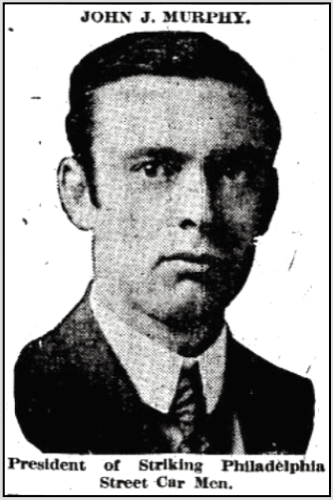
President John J. Murphy, of the Central Labor Union, instructed Secretary Charles Hope to read the resolution recently passed by the Central Labor Union to the effect that every union that did not go on strike would be regarded, as “working against our best interests.”
Hellraisers Journal – Wednesday March 30, 1910
Spokane, Washington – “S. O. Chinn Did Not Die in Vain”
From The Spokane Press of March 21, 1910:
VICTIM CHINN DID NOT DIE IN VAIN
———-
The Workingman’s Paper March 26, 1910
S. O. Chinn did not die in vain.
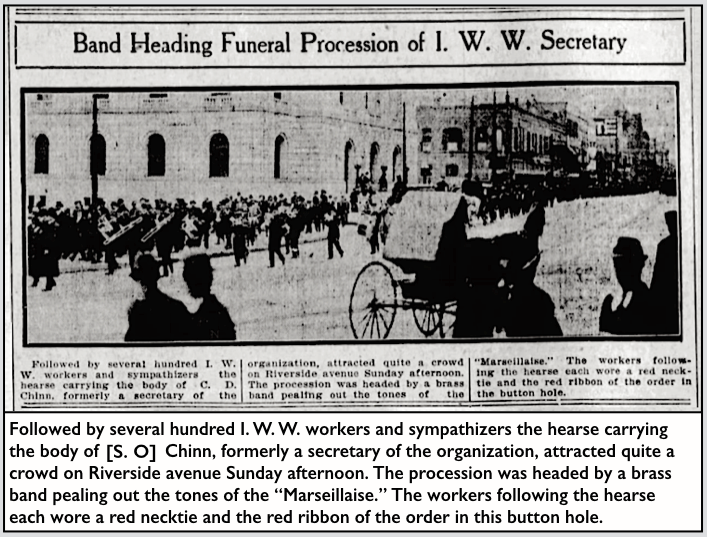
The funeral of this victim of Sullivan’s brutal methods occurred yesterday, and while Chinn was but a simple worker in the ranks his cortege was one of the most imposing the city has seen in months. It was not an I. W. W. demonstration, for hundreds were there who were not followers of the union; it was the respect of honest men for another man who died for what he held to be principle.
Chinn’s death appears to have bean the turning point, in the sentiment of Spokane regarding the police system. Before Chinn died the recent conflict was generally regarded as merely a fight between authority and anarchy; now that the dust has settled, the average worker is discovering that it was a fight between brutality-senseless brutality run amuck-and devotion to a principle by men who had nothing to gain and everything-even life itself-to lose.
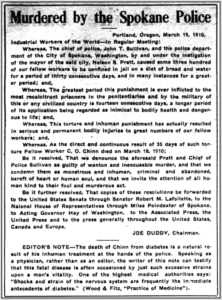
The Portland (Ore.) I. W. W. local on Saturday passed strong resolutions on Chinn’s death [see inset], condemning Mayor Pratt and Acting Chief Sullivan. While these resolutions will have no especial effect in Spokane they will in Oregon, and as they are being sent out to every city and town where the telegraph goes, the result will be that this city will be given a most unfortunate name for needless brutality; all because it had a chief of police, a mayor and a prosecuting attorney who could think of nothing but brutality to quell a disturbance. The I. W. W. conflict could have been settled in two days had the commonest principle of sense and humanity been used. They were not, and a great flare of scandal arose.

 ———-
———-
 ———-
———-—–
 ———-
———- ———-
———-—–
—–
CHILD does not blossom into maturity in a day, nor can a weakling to transformed into a Hercules over night. It requires the lapse of many years in the one instance as in the other. And several decades may pass before a city or a nation attains its majority. Yet there is no telling for how long a time the elements have been gathering for some mighty upheaval; how soon, when the surface of things seemed as calm as ever, there would break out an eruption such as would rearrange all that seemed stable and permanent.
 ———-
———-—–
 ———-
———- ———-
———-