Hellraisers Journal: From International Socialist Review: “Outlook for Socialism” by Eugene Victor Debs, Part II

Share

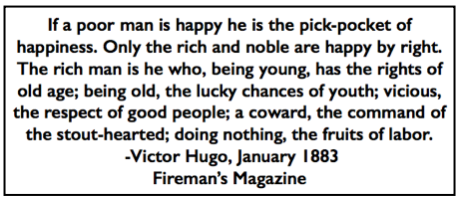
Quote Victor Hugo To Rich n Poor, Firemens Mag p5, Jan 1883———-

Hellraisers Journal – Tuesday September 4, 1900
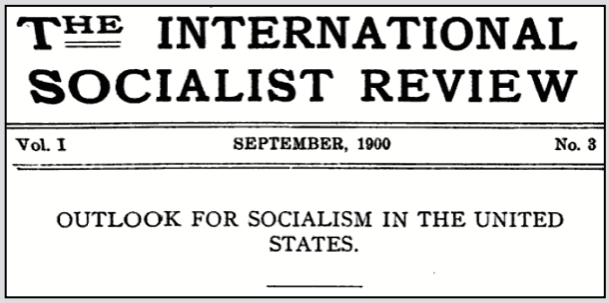
“Outlook for Socialism in the United States” by Eugene V. Debs

From the International Socialist Review of September 1900:

OutLook for Socialism by EVD, ISR p129, Sept 1900
[Part II of II

-by Eugene Debs, Social Democratic Party’s Candidate for President.]

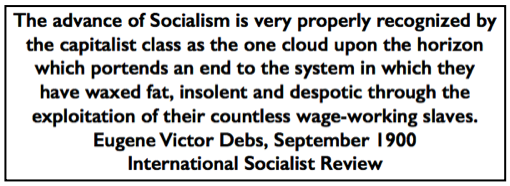
EVD crpd Nw Orln Tx Dem p3, Jan 26, 1900What the workingmen of the country are profoundly interested in is the private ownership of the means of production and distribution, the enslaving and degrading wage-system in which they toil for a pittance at the pleasure of their masters and are bludgeoned, jailed or shot when they protest—this is the central, controlling, vital issue of the hour, and neither of the old party platforms has a word or even a hint about it.

As a rule, large capitalists are Republicans and small capitalists are Democrats, but workingmen must remember that they are all capitalists, and that the many small ones, like the fewer large ones, are all politically supporting their class interests, and this is always and everywhere the capitalist class.

Whether the means of production—that is to say, the land, mines, factories, machinery, etc.—are owned by a few large Republican capitalists, who organize a trust, or whether they be owned by a lot of small Democratic capitalists, who are opposed to the trust, is all the same to the working class. Let the capitalists, large and small, fight this out among themselves.

The working class must get rid of the whole brood of masters and exploiters, and put themselves in possession and control of the means of production, that they may have steady employment without consulting a capitalist employer, large or small, and that they may get the wealth their labor produces, all of it, and enjoy with their families the fruits of their industry in comfortable and happy homes, abundant and wholesome food, proper clothing and all other things necessary to “life, liberty and the pursuit of happiness.” It is therefore a question not of “reform,” the mask of fraud, but of revolution. The capitalist system must be overthrown, class-rule abolished and wage-slavery supplanted by the co-operative industry.
Continue reading “Hellraisers Journal: From International Socialist Review: “Outlook for Socialism” by Eugene Victor Debs, Part II”

Hellraisers Journal: From International Socialist Review: “Outlook for Socialism” by Eugene Victor Debs, Part I

Share

Quote EVD Socialism Portends to Capitalist, ISR p131, Sept 1900———-

Hellraisers Journal – Monday September 3, 1900
“Outlook for Socialism in the United States” by Eugene V. Debs

From the International Socialist Review of September 1900:

OutLook for Socialism by EVD, ISR p129, Sept 1900
[Part I of II

-by Eugene Debs, Social Democratic Party’s Candidate for President.]

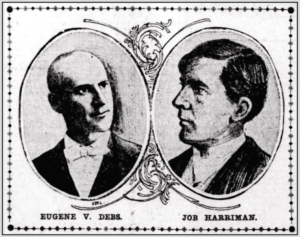
SDP Campaign, EVD n Job Harriman, SF Call p2, Mar 9, 1900

The sun of the passing century is setting upon scenes of extraordinary activity in almost every part of our capitalistic old planet. Wars and rumors of wars are of universal prevalence. In the Philippines our soldiers are civilizing and Christianizing the natives in the latest and most approved styles of the art, and at prices ($13 per month) which command the blessing to the prayerful consideration of the lowly and oppressed everywhere.

In South Africa the British legions are overwhelming the Boers with volleys of benedictions inspired by the same beautiful philanthropy in the name of the meek and lowly Nazarene; while in China the heathen hordes, fanned into frenzy by the sordid spirit of modern commercial conquest, are presenting to the world a carnival of crime almost equaling the “refined” exhibitions of the world’s “civilized” nations.

And through all the flame and furore of the fray can be heard the savage snarlings of the Christian “dogs of war” as they fiercely glare about them, and with jealous fury threaten to fly at one another’s throats to settle the question of supremacy and the spoil and plunder of conquest.

The picture, lurid as a chamber of horrors, becomes complete in its gruesome ghastliness when robed ministers of Christ solemnly declare that it is all for the glory of God and the advancement of Christian civilization.

This, then, is the closing scene of the century as the curtain slowly descends upon the blood-stained stage—the central figure, the pious Wilhelm, Germany’s sceptered savage, issuing his imperial “spare none” decree in the snag froid of an Apache chief—a fitting climax to the rapacious regime of the capitalist system.

Cheerless indeed would be the contemplation of such sanguinary scenes were the light of Socialism not breaking upon mankind. The skies of the East are even now aglow with the dawn; its coming is heralded by the dispelling of shadows, of darkness and gloom. From the first tremulous scintillation that guilds the horizon to the sublime march to meridian splendor the light increases till in mighty flood it pours upon the world.

Continue reading “Hellraisers Journal: From International Socialist Review: “Outlook for Socialism” by Eugene Victor Debs, Part I”

Hellraisers Journal: From International Socialist Review: “The Irwin Coal Strike” by Thomas F. Kennedy, Part III

Share

Quote Mother Jones, Last Great Battle, UMWC p420, Jan 26, 1910———-

Hellraisers Journal – Saturday August 27, 1910
“The Irwin Coal Strike” by Thomas F. Kennedy, Part III

From the International Socialist Review of August 1910:

Westmoreland County Coal Strike, by TF Kennedy, ISR p99, Aug 1910

[Part III of III]

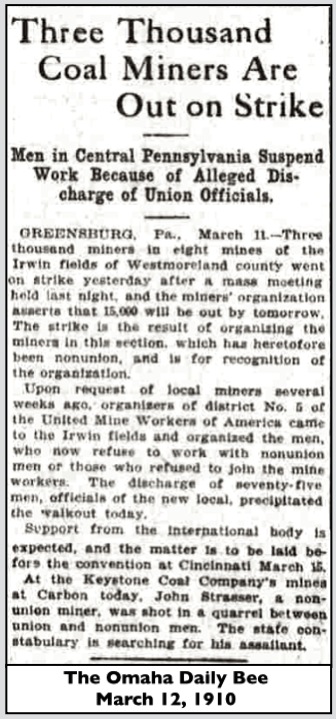
Westmoreland Coal Strike Begins Mar 10, Omaha Daily Bee p15, Mar 12, 1910

At a Socialist meeting at Jamison No. I on the evening of July 8 three well known scabs walked up and took seats on the grass in the middle of the crowd. Several armed deputies were also present, and we heard later that a large body of these cut-throats were concealed nearby. The purpose of course was to irritate the strikers so they would attack the scabs and use this as an excuse for whole sale murder. They were disappointed because the scabs were not molested, except for the scourging usually given scabs and deputies by the speakers.

* * *

Not a single beer keg, beer case, beer bottle or whiskey bottle around any camp that I have visited. Not a sign of intoxication. This is one of the gratifying features of the strike.

* * *

Numerous dynamite explosions have occurred throughout the district during the strike. No one was injured and no damage to property resulted. If experienced miners accustomed to using explosives had been guilty of such folly there would be somebody or something destroyed. I have not the slightest doubt about declaring that this is the work of the operators or their agents, or of deputies who want their $5.00 day jobs to last and who perhaps are doing it without the knowledge of the sheriff or his employers, the operators.

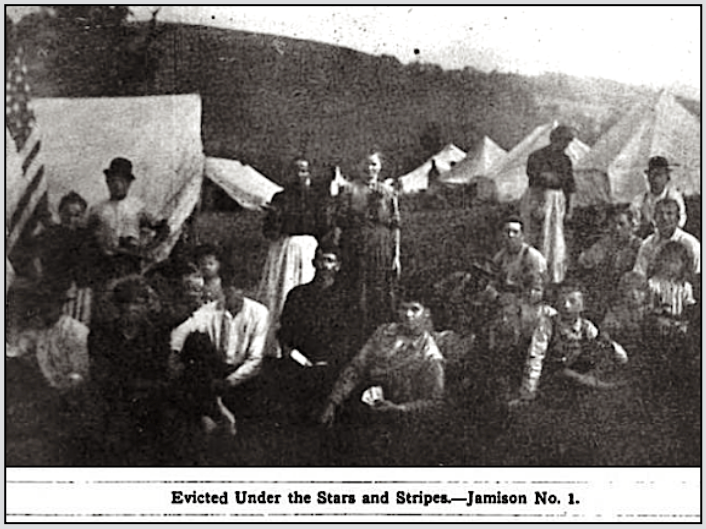
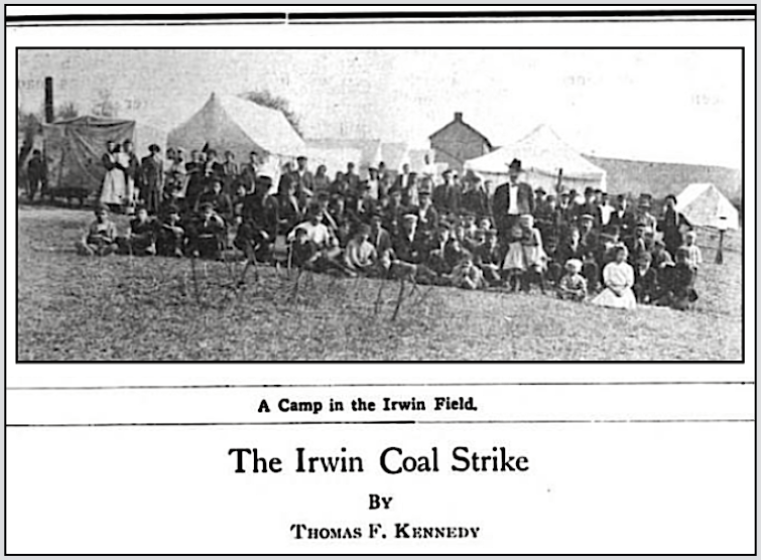
One of the noteworthy features of the strike is the sympathy displayed by the farmers. And it is no mere lip sympathy either, but takes the good substantial form of defying the coal corporations and permitting the strikers to erect tents on their farms right under the noses of the scabs.

Continue reading “Hellraisers Journal: From International Socialist Review: “The Irwin Coal Strike” by Thomas F. Kennedy, Part III”

Hellraisers Journal: From International Socialist Review: “The Irwin Coal Strike” by Thomas F. Kennedy, Part II

Share

Quote Mother Jones, Last Great Battle, UMWC p420, Jan 26, 1910———-

Hellraisers Journal – Friday August 26, 1910
“The Irwin Coal Strike” by Thomas F. Kennedy, Part II

From the International Socialist Review of August 1910:


Westmoreland County Coal Strike, by TF Kennedy, ISR p99, Aug 1910

[Part II of III] 

Westmoreland County Coal Strike, Camp of Evicted, ISR p101, Aug 1910

While they were not immediately successful in every instance, the operators viewed these peaceful demonstrations with dread and alarm. They rushed to the court, demanded and secured immediately a temporary injunction forbidding the marching on the public highways of Westmoreland county. After listening to testimony from both sides, and after the operators had been compelled to admit that all the disorder had been caused by the thugs who were acting as deputies, the judge made it permanent.

The contest in the county court over the granting of the permanent injunction together with several brutal murders committed by agents of the operators and the thugs employed as deputies gave the strike wide publicity. The injunction trial and the murders created more sentiment in favor of the strike amongst all classes than could weeks of preaching and marching.

The injunction was so sweeping, all inclusive and all embracing that when one of their number died the “injuncted” miners who wished to walk on the public highways to attend his funeral to avoid being thrown into prison for contempt of court, had to get a special dispensation.

Continue reading “Hellraisers Journal: From International Socialist Review: “The Irwin Coal Strike” by Thomas F. Kennedy, Part II”

Hellraisers Journal: From International Socialist Review: “The Irwin Coal Strike” by Thomas F. Kennedy, Part I

Share

Quote Mother Jones, Last Great Battle, UMWC p420, Jan 26, 1910———-

Hellraisers Journal – Thursday August 25, 1910
“The Irwin Coal Strike” by Thomas F. Kennedy, Part I

From the International Socialist Review of August 1910:

Westmoreland County Coal Strike, Irwin Field Camp, ISR p99, Aug 1910

[Part I of III]

THE fourth startling shock sustained by complacent, self-satisfied American Plutocracy within ten months is the strike of 20,000 or more miners in the Irwin coal fields in Westmoreland county, Pa.

It is a shock not because of its magnitude or duration, but because of the feeling of absolute security enjoyed for years by the operators. They convinced themselves that their kingdom was strike proof. They had established a perfect quarantine against labor agitators from the outside. Numerous failures of small strikes extending over a long period of years clinched their convictions that they had established ideal labor conditions. They felt as secure as the ancient slave masters, the Feudal barons or Schwab when he drank that toast to “The best, most contented and CHEAPEST labor in the world,” meaning of course the workers in his private Siberia at Bethlehem.

The first of the four tooth-loosening shocks was the unorganized, spontaneous revolt of the workers at McKees Rocks in June 1909. The second was at Bethlehem, and the third the general strike at Philadelphia.

The fourth, the strike in the Irwin field, presents some features that were absent in all of the others.

Continue reading “Hellraisers Journal: From International Socialist Review: “The Irwin Coal Strike” by Thomas F. Kennedy, Part I”

Hellraisers Journal: Fred D. Warren on “Seditious Libel” and the Free Press Fight at New Castle, Pennsylvania, Part II

Share

Quote BBH, Win Workers to Revolution, ISR p1096, June 1910———-

Hellraisers Journal – Thursday July 7, 1910
New Castle, Pennsylvania – Socialist Rally Behind Free Press

From the International Socialist Review of July 1910:

The Free Press Fight at New Castle, Pa.

By FRED D. WARREN
———-

[Part II of II.]

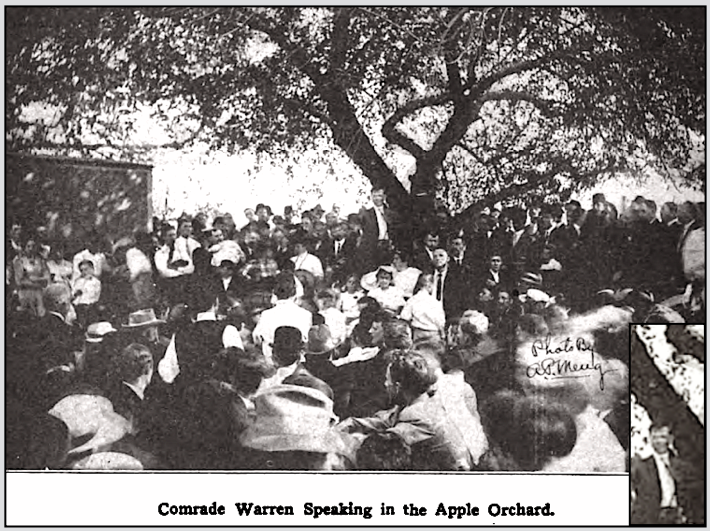
New Castle PA, Warren at Apple Orchard ed, ISR p36, July 1910

While the jury was deliberating and the judge and his friends scheming to overthrow the right of free press, there was something of importance transpiring in another quarter of the trust-ridden town.

From the surrounding cities came Socialists and their friends by the thousand. Every incoming railroad train was crowded. A special of nine coaches was required to bring the delegation from Pittsburg. The inter-urban service was taxed to its utmost capacity by the Socialists from nearby cities. The visitors were met by the local committee on arrangements and the line of march was through the principal streets to County Head quarters, located in the very heart of the city. It was an inspiring revolutionary spectacle and one that New Castle will not soon forget. Comrade John W. Slayton, nominated for Governor the day before, was called for and from the window overlooking the street spoke for a few minutes. When Slayton’s tall form and kindly features appeared there arose a lusty cheer that resounded from hill to hill and caused smug New Castle to pause and inquire into the cause of this sudden outburst of enthusiasm.

In the afternoon, in Cascade Park, fully 15,000 persons had gathered to hear the speakers. The mounted police were on hand promptly and refused to allow the speaking to take place as arranged. The park was a private one, it was explained, owned by the street car company. Comrade Ries, of Ohio, who is always on the job, rented an apple orchard a few hundred yards distant from the park entrance. Perhaps one-third of the immense throng, (it being impossible in the confusion to get word to all) marched to the new location where the program was continued. The mounted police were on hand, but our rent receipt for the use of the orchard, forced them to respect our “property rights.” The meeting had dispersed before the blue laws of Pennsylvania against a Sunday political meeting, could be invoked.

Continue reading “Hellraisers Journal: Fred D. Warren on “Seditious Libel” and the Free Press Fight at New Castle, Pennsylvania, Part II”

Hellraisers Journal: Fred D. Warren on “Seditious Libel” and the Free Press Fight at New Castle, Pennsylvania, Part I

Share

Quote BBH, Win Workers to Revolution, ISR p1096, June 1910———-

Hellraisers Journal – Wednesday July 6, 1910
New Castle, Pennsylvania – Free Press on Trial for “Seditious Libel”

From the International Socialist Review of July 1910:

The Free Press Fight at New Castle, Pa.

By FRED D. WARREN
———-

[Part I of I.]

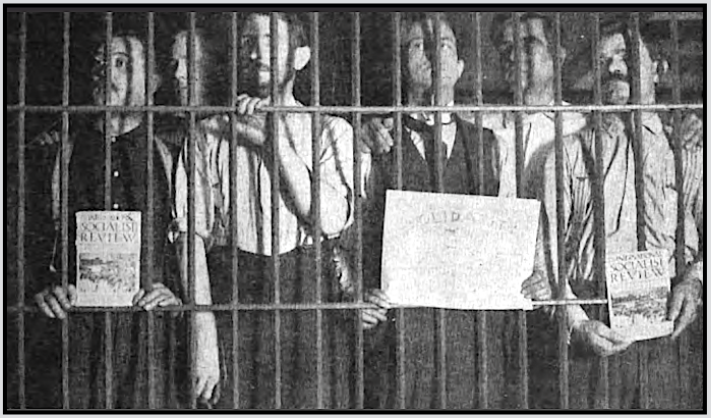
New Castle PA, Jailed for Free Press, ISR Cv, July 1910

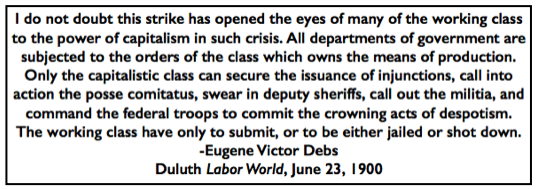
Letter T, ISR p894, Apr 1910HE case against the comrades comprising the committee engaged in the publication of the New Castle Free Press, charged with “seditious libel,” was tried under what was known as the old English common law. This law against “seditious libel” was framed at a time when kings ruled by divine right, and in order to establish the guilt of the “pestiferous” McKeever, Hartman, McCarty and White, the prosecutor of Lawrence County, Pennsylvania, cited a case that occurred during the reign of Charles II. A score of Irish peasants raised a rebellion, so the prosecutor read, against the English land lords. These Irish peasants were arrested, charged with “seditious libel” and sentenced to prison. That was nearly four hundred years ago, yet we find a fossilized county prosecutor referring to it today in an effort to convict these four comrades of ours. It would be laughable were it not for the serious consequences that are likely to follow this New Castle trial for “seditious libel.”
Continue reading “Hellraisers Journal: Fred D. Warren on “Seditious Libel” and the Free Press Fight at New Castle, Pennsylvania, Part I”

Hellraisers Journal: International Socialist Review, Volume I, Issue 1: The St. Louis Streetcar Strike and Posse Comitatus

Share

Quote EVD, re St Louis Streetcar Strike Massacre, LW p1, June 23, 1900———–

Hellraisers Journal – Monday July 2, 1900
St. Louis, Missouri – Strikers Slaughtered by Posse Comitatus

From the International Socialist Review of July 1900:

The Chicago and St. Louis Strikes

[Part II of II.]

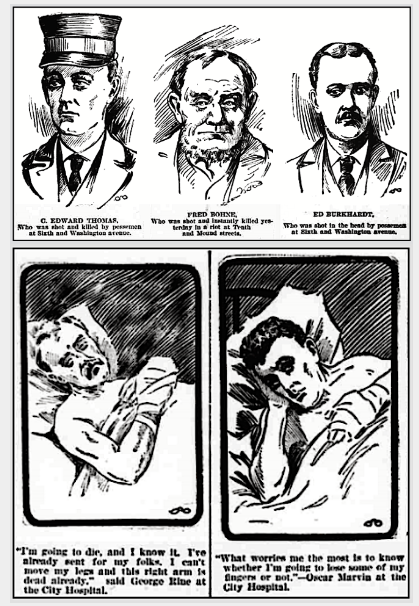
Labor Martyrs, St Louis Streetcar Strike copy, StL Rpb p1, June 11, 1900
St. Louis Republican of June 11, 1900

The St. Louis street car strike, like the one just described, started with various subjects of dispute and soon narrowed down to a question of the recognition of the right of the men to act together. From the beginning this strike was marked with acts of violence. However much this may be deplored the fact remains that so long as capital exists it is impossible for any large strike to continue for any length of time without the accompaniment of violence. This is especially true when lines of transportation are concerned.

When non-union men are so conspicuously engaged in treason to their class as they must be when they run street cars or railroad trains in time of strike it would require a stage of human development far above that of capitalism to produce the sort of human beings that will stand idly by and see their means of living taken away and not resort to violence. But before commenting further on the subject of violence during strikes a few observations are necessary. In the first place it is well to remember that the press is in the control of the present ruling capitalist class and always exaggerates any violence that may take place and in a great many instances, notably during the great railroad strike of 1894, manufactures out of whole cloth long and elaborate stories of acts of violence that never occurred at all. This in itself is sufficient proof of which class it is that deserves violence, “The wish is father to the thought.”

Continue reading “Hellraisers Journal: International Socialist Review, Volume I, Issue 1: The St. Louis Streetcar Strike and Posse Comitatus”

Hellraisers Journal: International Socialist Review, Volume I, Issue 1: The Great Chicago Building Trades Lock-Out

Share

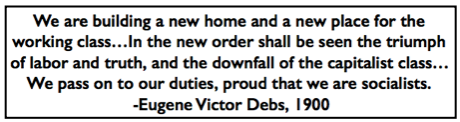
Quote EVD, Proud Socialists SDP Conv, SF Cls Strgl p4, Mar 17, 1900———-

Hellraisers Journal – Sunday July 1, 1900
Chicago, Illinois – Great Lock-Out of Building Trades Continues

From the International Socialist Review of July 1900:

“The Chicago and St. Louis Strikes”
Part I of II.

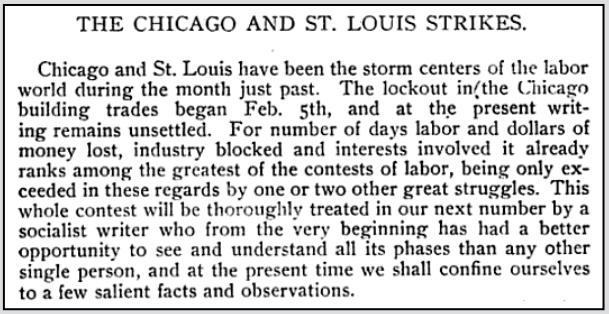
Chicago n St Louis Strikes, ISR p58, July 1900

At the beginning there were various points of contention, but as time passed these all gave way to one main point of contention, the question of the principle of federated trades. All the building trades of Chicago are federated for such common action as may be thought necessary in the Building Trades Council. The contractors insist that this body disband as a condition to any settlement whatever.

This is, of course, an absolutely impossible condition for the laborers, the concession of which would not be a settlement at all, but a crushing defeat. It would mean the setting back of labor one step in the long upward struggle of centuries; the abandonment of one vantage point gained at terrible cost. The individual union is almost if not quite as helpless in the face of the intensely concentrated capital of today as was the individual work man before the capitalist employer of a generation ago. This was especially emphasized in the Chicago struggle as the employers were all united in a Central Contractors’ Council. The fact that the contractors never dreamed of dissolving their central body proved the purely class nature of their demand and showed that the dispute was one that could be settled only by a test of strength.

Continue reading “Hellraisers Journal: International Socialist Review, Volume I, Issue 1: The Great Chicago Building Trades Lock-Out”

Hellraisers Journal: Staff of Solidarity Behind Bars in New Castle, Pennsylvania, for Displeasing Steel Trust, Part II

Share

Quote BBH, Win Workers to Revolution, ISR p1096, June 1910———-

Hellraisers Journal – Sunday June 5, 1910
New Castle, Pennsylvania – Big Bill Haywood Visits Solidarity Staff in Jail

From the International Socialist Review of June 1910:

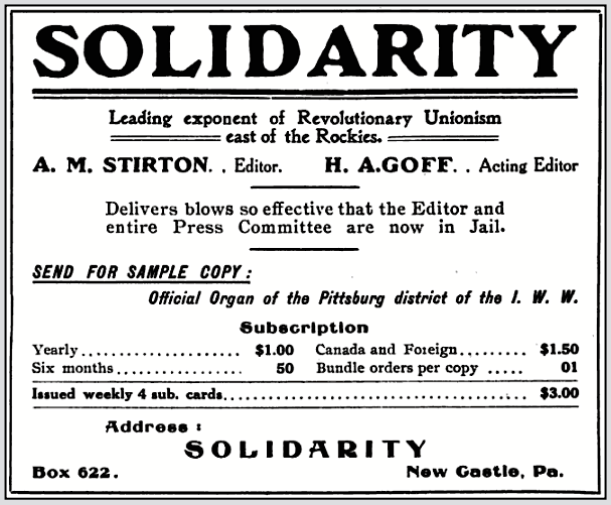
“Leading exponent of Revolutionary Unionism east of the Rockies.”

Solidarity Ns, AD, Eds Stirton n Goff, ISR p1134, June 1910—–

“Solidarity in Prison” by William D. Haywood

Solidarity Ns in Prison by BBH, ISR p1065, June 1910—–

[Part II of II.]

The [New Castle] Free Press and Solidarity were issued every week. The employers were furious. Members of the Business Men’s Exchange grew hydrophobic. Detectives were hired and set on the trail of the papers and finally the editorial staffs of both The Free Press and Solidarity were arrested, charged with an alleged violation of the Pennsylvania publishing law (enacted in 1907 and never called into use except on one occasion, as a matter of spite).

This law is being violated daily and weekly by many publications in Pennsylvania at the present time.

The editors of Solidarity and the Free Press were hailed into court and with them the editor of the New Castle Herald, a capitalist sheet. All three were convicted, but the leniency of the court, resulted in the capitalist editor being released on payment of costs while the others were fined $100 and costs.

The Free Press appealed their case while the members of Solidarity refused to pay the fines and were sentenced to jail, declining to accept Judge Porter’s profferred offer of ten days in which to look for money to pay them. Knowing that the workers alone would be the ones to contribute, they preferred to go to jail.

Continue reading “Hellraisers Journal: Staff of Solidarity Behind Bars in New Castle, Pennsylvania, for Displeasing Steel Trust, Part II”