 ———-
———-
Hellraisers Journal – Friday July 23, 1909
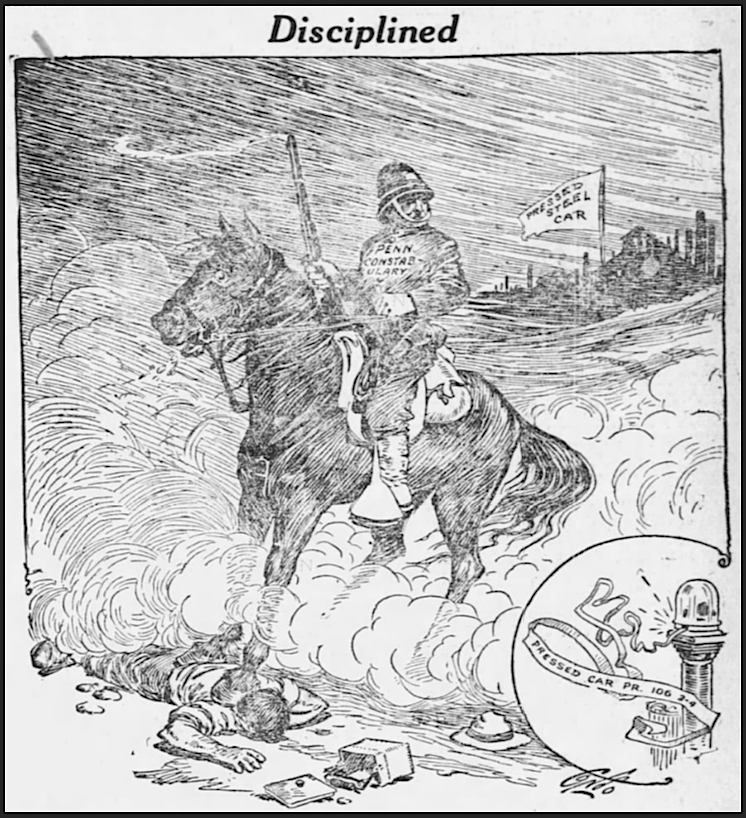
McKees Rocks, Pennsylvania – Strikers “Disciplined”
From The Pittsburg Press of July 19, 1909:
———-
———-
Hellraisers Journal – Friday July 23, 1909
McKees Rocks, Pennsylvania – Strikers “Disciplined”
From The Pittsburg Press of July 19, 1909:
———-
———-
Hellraisers Journal – Thursday July 22, 1909
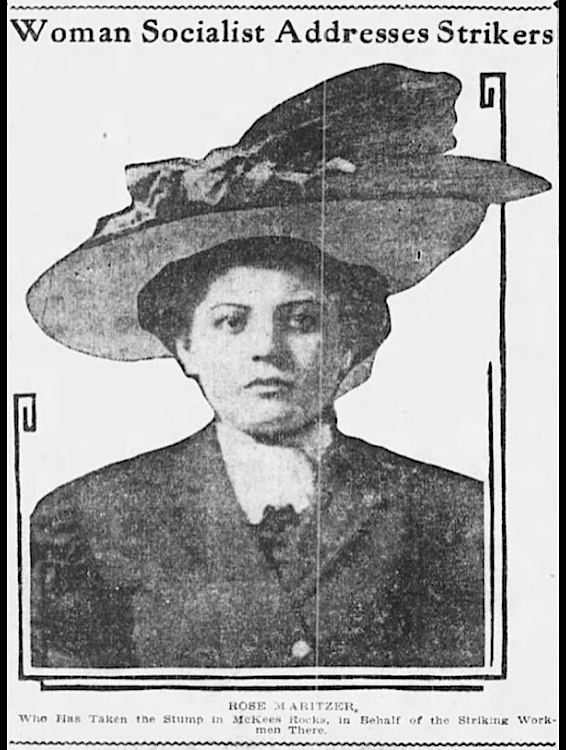
McKees Rocks, Pennsylvania – Strikers Cheer Socialists at Mass Meeting
From The Pittsburg Press of July 19, 1909:
“NO SURRENDER” IS SLOGAN OF THE STRIKERS
—–
American Workmen Are Not Fooled by Ruse and
Refuse to Take Places of Men Who Quit
—–CHEER ADDRESSES MADE BY SOCIALIST LEADERS
—–While the Pressed Steel Car Co.’s attempt to resume work in full this morning at its McKees Rocks plant failed utterly, the strikers held a rousing meeting of several hours’ duration, at which they agreed to stick together and fight indefinitely.
An impressive scene was presented on the Indian Mound, which from the beginning of the strike has been used as the meeting place for the workmen. Between 4,000 and 5,000 men and women of many nationalities congregated there and were addressed in stirring manner in their own languages by speakers of more than local repute.
—–
 ———-
———-
Hellraisers Journal – Wednesday July 21, 1909
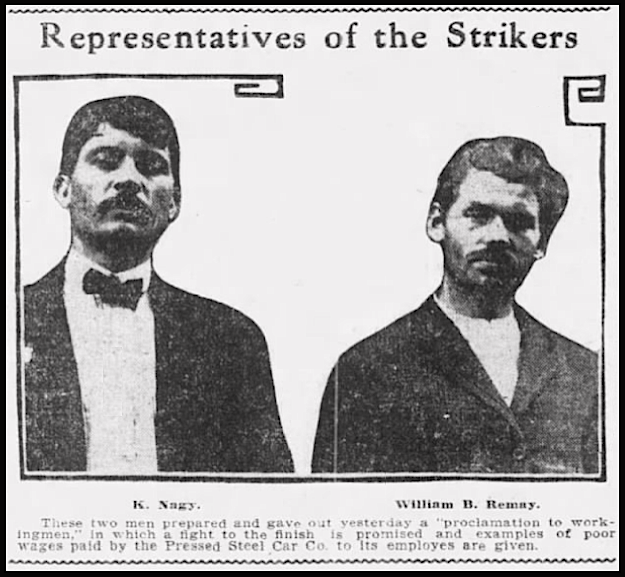
McKees Rocks, Pennsylvania – Strikers of Pressed Steel Car Co. Issue Proclamation
From The Pittsburg Press of July 18, 1909:
—–
Proclamation by Strikers
——In refutation of the repeated statements of the officials of the Pressed Steel Car Co., that no strike exists at the Schoenville plant, the organized strikers yesterday issued a formal proclamation. It affirms in the strongest language that a strike is in progress and cites examples of the company’s alleged wage scale under the “pool system.” The proclamation, issued in behalf of the employes by William B. Remay and K. Nagy. is as follows:
Citizens Workingmen:
We talk to you, the oppressed workers, banished by the strike:
Public opinion is not sufficiently informed of the situation, and according to the statement of the directors of the Pressed Steel Car Co. there is no strike existing at McKees Rocks.
We call this statement an untruth. Yes. there is a strike and we proclaim it openly before the public that the bad conduct of the directory of the company is the direct cause of it. We complained numerous times but our complaints have never been listened to, and after complaining again last Monday, we got for our answer: “Your services are no longer required,” and we have been driven out of the works.
Citizens and workingmen, would you have acted in any other way than we did?
 ———-
———-
Hellraisers Journal – Tuesday July 20, 1909
McKees Rocks, Pennsylvania – Strikers Seek Settlement
-As the Pressed Steel Car strikers seek a settlement through Socialist Attorneys, we learn that “one a day” is the death toll for the workers within the plant.
From The Pittsburg Press of July 16, 1909:
From page 1:
PEACE MOVE BY STRIKERS
—–
Committee of Four, One from Each
Nationality, to Confer, Through
Socialist Party Attorneys,
With Officials
—–RENEWAL OF RIOTING IF OFFERS ARE SPURNED
—–
Attorney Piekarski Offers His Services to
the Sheriff-Undercurrent of Excitement
in Schoenville This Afternoon
—–
Rioting at McKees Rocks has for the present given place to an effort at compromise, and a committee of four, representing the striking employes, is now conferring with attorneys of the Socialist party, who will take up the matter of settlement with officials of the Pressed Steel Car Co.
“We demand pay by the hour-no other way,” is the only demand made by the strikers.
 ———-
———-
Hellraisers Journal – Monday July 19, 1909
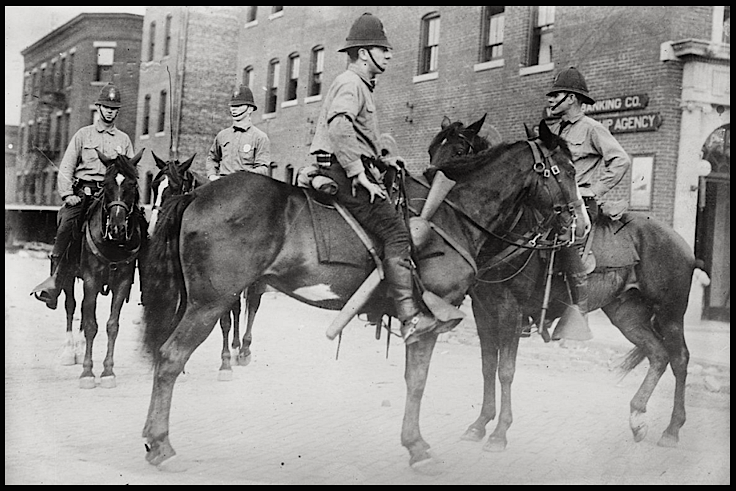
McKees Rocks, Pennsylvania – Strikers of Pressed Steel Car Co. Battle Cossacks
From The Pittsburg Press of July 15, 1909:
4,000 RIOTERS ATTACK POLICE;
MANY ARE HURT
—–
Desperate Fighting Takes Place at Noon,
a Pitched Battle Raging Over Most of
McKees Rocks for Half Hour
–Sergeant of Constabulary Badly Wounded
—–FOUGHT LIKE DEMONS AGAINST OFFICERS
—–
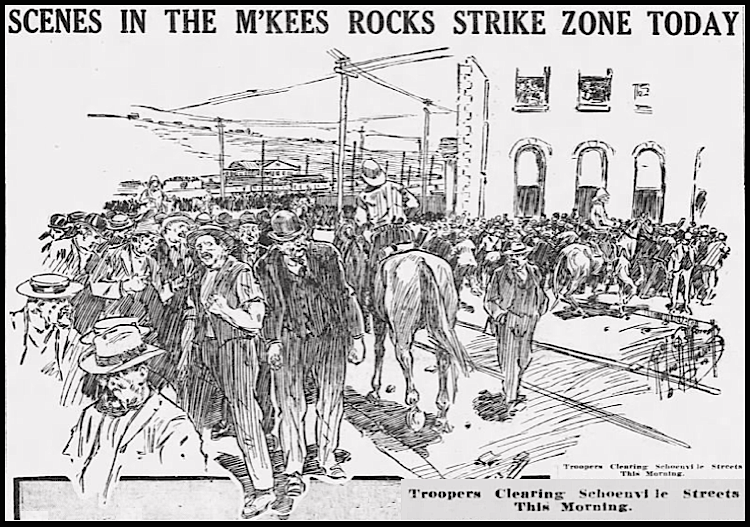
Desperate fighting took place at noon today between 4,000 of the Pressed Steel Car Co. strikers and their sympathizers and the State Constabulary, a pitched battle raging over most of McKees Rocks for half an hour.
 ———-
———-
Hellraisers Journal – Friday July 18, 1919
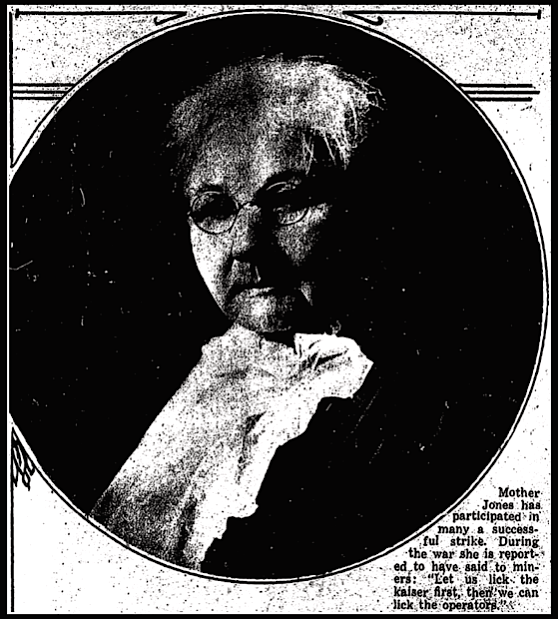
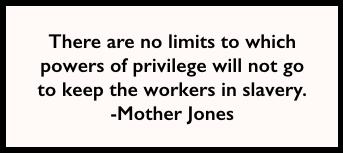
Mother Jones News for June 1919
-Found Speaking at Memorial for Coal Miners of Herrin, Illinois
From Springfield [Massachusetts] Republican of June 1, 1919:
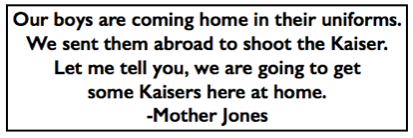
Mother Jones has participated in many a successful strike. During the war she is reported to have said to miners: “Let us lick the kaiser first, then we can lick the operators.”
 ———-
———-
Hellraisers Journal – Thursday July 17, 1919
Chicago, Illinois – Arrested for Speech Critical of Government
-Dissident to be “turned over to the government.”
From The Chicago Sunday Tribune of July 13, 1919:
Find Red Flag Poem on
Peace Treaty Assailer
—–
Frank Michalucine, of 14 West Superior street, was arrested in a poolroom at North Clark and West Huron streets yesterday after he is said to have made derogatory remarks about the government and the treaty which is now before congress for ratification.
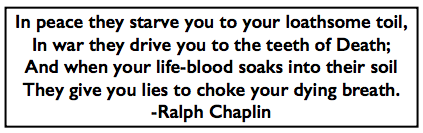
When searched at the detective bureau a copy of a poem called “The Red Flag” and said to have been written by Ralph Chaplin an inmate of the Leavenworth penitentiary, was found in his pocket.
Michalucine was arrested some time ago by federal agents on the same charge but was released. He will be turned over to the government tomorrow.
———-
[Photograph and emphasis added.]
 ———-
———-
Hellraisers Journal – Sunday July 16, 1899
“Treasonous and Seditious” Speech Sends Editor Stewart to Wardner Bullpen
From the Duluth Labor World of July 15, 1899:
—–
Writing of the imprisonment of Editor Stewart of the Mullen (Idaho) Mirror and the suppression of his paper on the charge of treason and sedition, J. J. Noll says in the People’s Paper:
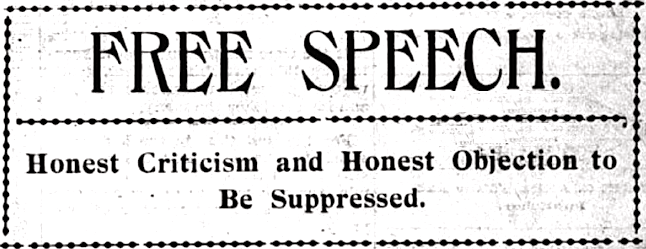
His criticism was an honest objection, honestly expressed, to Gen. Merriam’s shutting men up in box cars and cattle pens, and imposing such indignities and sufferings on them that four of them died outright and a number are on the verge of the grave. Is this governor and this general made of such stuff that one may not voice an objection to their methods of treating human beings. Can it be that a uniform and a majority vote converts ordinary mortals into gods?
Here is some of the treason and sedition uttered by Editor Stewart:
The “authorities” are declaring that they are handling the affair at Wardner as expeditiously as possible. That may be true. They say that the men are being examined as fast as they can be reached. That may be true. But what compensation will be made to the hundreds of men who have been falsely imprisoned in box cars and a vile filthy barn for from five days to four weeks, herded like sheep in a pen; taken from their work in the mines and mills with no chance to change their wet, heavy mine and mill garments for dry ones? How will the state compensates these men arrested at the bayonet point, while in the peaceful pursuit of their daily toil, given no chance to show whether or not there was any reason why they should be arrested at all? What excuse or compensation will the state make to those men who are released after being subjected for weeks to indignities, insults and abuses such as are said to be accorded political prisoners in Russian Siberia.
* * *
But why were they imprisoned at all? and why treated as convicts before they were given a hearing? The governor may be a hero in the dollar blinded eyes of the Spokane Review, and in “American official life” heroes are scarce, but heroes of the Review stripe are easily procurable for money—and the Standard Oil company has lots of money. Steunenburg has acted the paltroon in the matter from the start. He sent a fool to spy out the situation and bind the state to the oil company and hasn’t the courage to break the fetters that bind him.
———-
Hellraisers Journal – Saturday July 15, 1899
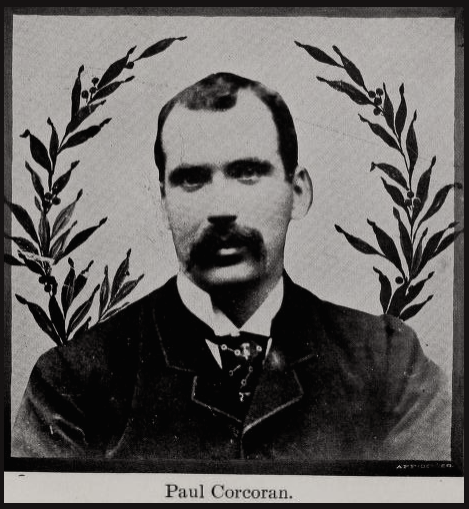
Wallace, Idaho – Trial of Paul Corcoran, Secretary Burke Miners’ Union
From The San Francisco Call of July 12, 1899:
CLARK CHANGES HIS TESTIMONY
—–
Cannot Positively Identify Corcoran.
—–TELLS ABOUT WARDNER RIOT
—–ONE SENSATION SPRUNG AT THE MURDER TRIAL.
—–
It Is the Attempt of One of the
Owners of the Standard Mine
to Compel the Witness to
Stick to His First Story.
—–Special Dispatch to The Call.
—–
WALLACE, Idaho, July 11.—In the trial of Paul Corcoran for the killing of James Cheyne the prosecution this morning called John Clark as a witness. Clark testified that he had been recording secretary of the Burke union, but had not attended the two meetings prior to the day of the riot. On that day he was at Mace, where the Standard mine is located, and when the train bearing the men from Burke came along he boarded it and went to Wardner. He went up into the town of Wardner and did not witness the lawless acts perpetrated on that day, but returned to Burke on the train which bore the returning rioters.
Witness said that when the train was nearing Wallace on the return trip he believed he saw the defendant sitting on top of a boxcar. At the time the witness testified before the Coroners jury he swore positively to the identity of the defendant, but since that time he had come to believe that he might be mistaken, and could not now identify Corcoran as being the man he saw on the car, although he had been acquainted with the defendant for more than three years.
 ———-
———-
Hellraisers Journal – Monday July 14, 1919
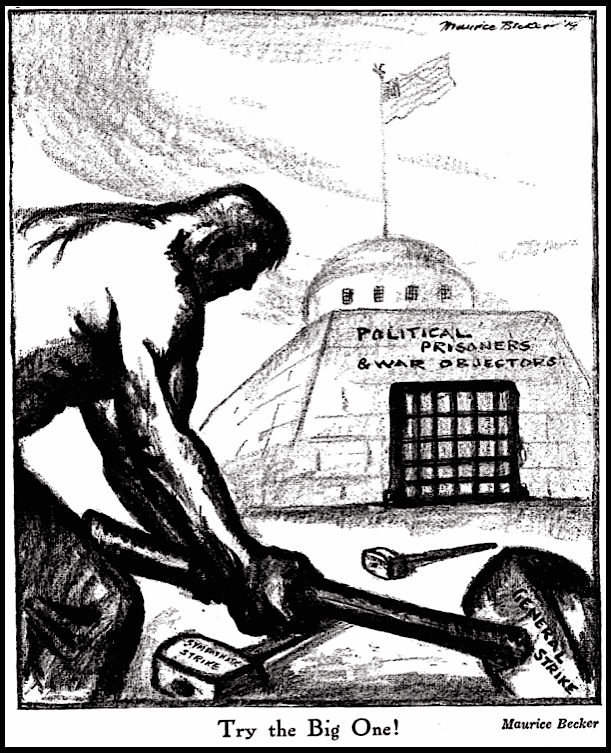
“Try the Big One” by Maurice Becker
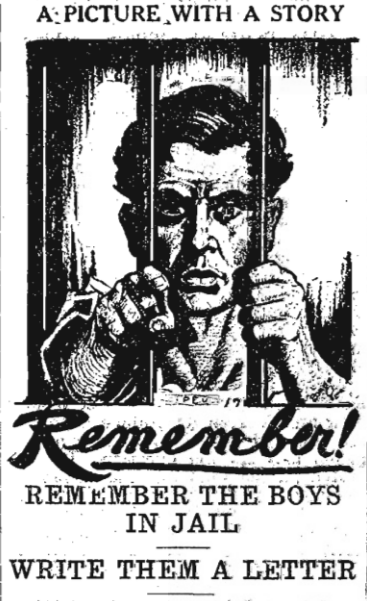
-General Strike for Prisoners of Conscience
From the New York Liberator of July 1919: