
 —————
—————
Hellraisers Journal – Sunday April 9, 1911
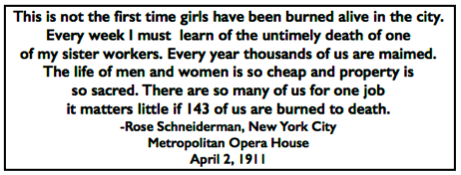
Mass Meeting at Metropolitan Opera House Stands for Fire Prevention
From The Survey of April 8, 1911:
THE COMMON WELFARE
PREVENTION OF FACTORY FIRES
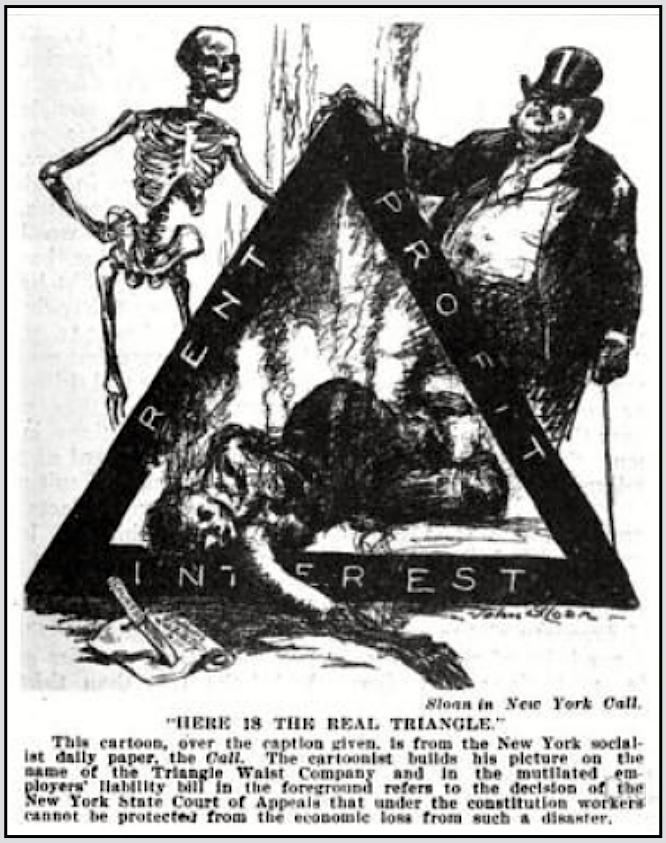
Prevention was the keynote of the whole week in discussion of the Triangle factory fire in New York and in other industrial cities which have begun to take stock of their risks. There were many meetings, chief of which was the citizens’ mass meeting at the Metropolitan Opera House, reported on succeeding pages, which resulted in the appointment of a committee of five made up of Eugene A. Philbin, chairman; Mary A. Dreier, Edward T. Devine, William Jay Schieffelin, Lillian D. Wald, and Peter Brady. The New York American has organized a committee on prevention of which Ernest Flagg, an eminent architect, is chairman and the other members are Fire Chief Croker, P. Tecumseh Sherman, formerly state commissioner of labor, and William Archer, a builder.
A conference under call of R. Fulton Cutting, president of the Association for Improving the Condition of the Poor, appointed a committee consisting of Mr. Cutting, Franklin B. Kirkbride, Leopold Plaut, Homer Folks and John A. Kingsbury which, in conjunction with the mass meeting committee, is organizing a permanent body on fire prevention.
On Wednesday (after this issue had gone to press) public burial was given the eight unclaimed bodies and the workers of the city planned an enormous silent parade in their honor.
One of the events of the week was the opening of the Triangle Waist Company in another building. A violation of the law was immediately filed against it for installing a row of sewing machines in front of the exit to the fire-escapes. The proprietor asked the Ladies ‘ Shirtwaist Union to organize his shop, but no action was taken.
 ———-
———-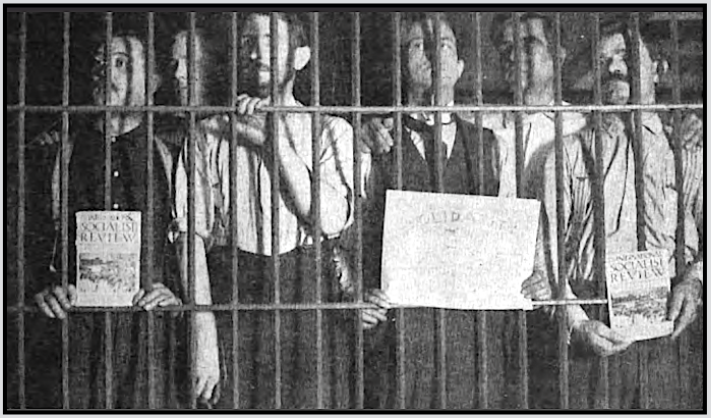
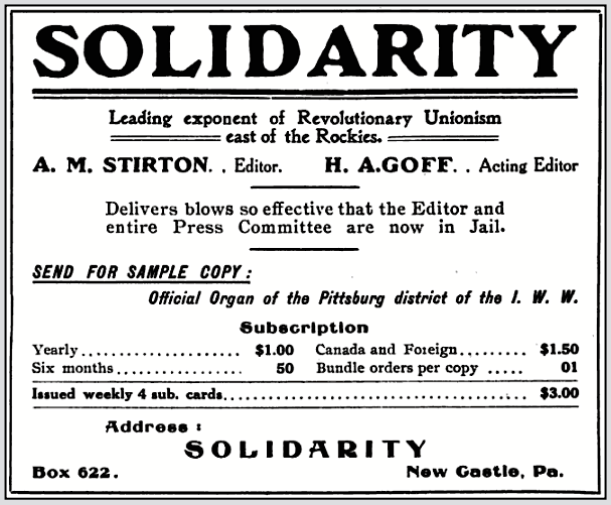
 HE case against the comrades comprising the committee engaged in the publication of the New Castle Free Press, charged with “seditious libel,” was tried under what was known as the old English common law. This law against “seditious libel” was framed at a time when kings ruled by divine right, and in order to establish the guilt of the “pestiferous” McKeever, Hartman, McCarty and White, the prosecutor of Lawrence County, Pennsylvania, cited a case that occurred during the reign of Charles II. A score of Irish peasants raised a rebellion, so the prosecutor read, against the English land lords. These Irish peasants were arrested, charged with “seditious libel” and sentenced to prison. That was nearly four hundred years ago, yet we find a fossilized county prosecutor referring to it today in an effort to convict these four comrades of ours. It would be laughable were it not for the serious consequences that are likely to follow this New Castle trial for “seditious libel.”
 —–
—– —–
—–