
 —————
—————
Hellraisers Journal – Sunday July 2, 1911
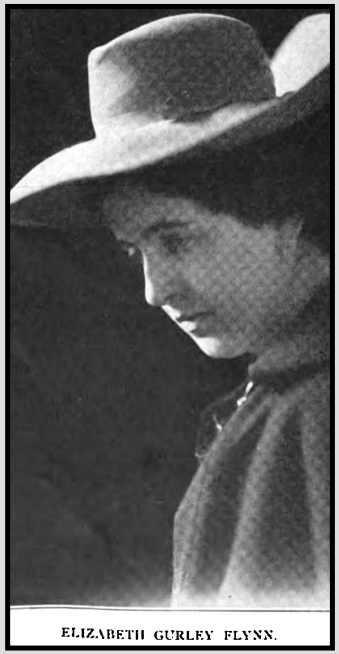
Elizabeth Gurley Flynn Describes Strike of Young Girls at Minersville
From the International Socialist Review of July 1911:
—–
Coombs became desperate. He threatened to move his factory to Brooklyn, where he claims a site has already been purchased, but the girls realize that he is bound to this region by economic ties which cannot easily be severed. He rents houses and owns a splendid residence in Minersville, and controls factories for Phillips in Tremont, Valley View, Mahoney City, Trackville and other places. Here he is a pillar of society, hobnobs with judges, and has his own automobile. Whereas, his importance would sink into insignificance in a great industrial center.
We are making efforts not only to tie up all of his other plants, but every factory and mill in this region, where wages are inadequate and women are shamelessly exploited. Our attempts in Tremont illustrate our difficulties and Mr. Coombs’ methods. While we were addressing the girls from one factory Mr. Coombs rushed past in his machine and into his factory, where he detained the girls for about five minutes. His intimation that if they listened to the agitators they need not report for work further had effect, for when he dismissed them, they marched convict-like, arm in arm, past the meeting, and could not be induced to listen.
These girls had their wages raised to nine cents to head off a strike. Thus, they are profiting by the struggle of the girls in Minersville, while virtually scabbing on them. Far from being discouraged, however, we feel that Coombs has shown his fear, and we intend to arouse these girls to a realization of the situation.
This strike, the first of its kind in the anthracite region, has been invaluable, as it has served to set ablaze the smouldering rebellion of other women workers. It was followed by a strike in the silk mill of Shamokin, and a partial strike in the silk mill of Pottsville.
 —————
—————
 —————
—————
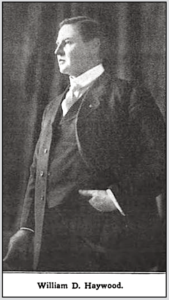 And in Wales it was my good fortune to be there, not to theorize but to take part in the general strike among the coal miners. Previous to my coming, or in previous strikes, the Welsh miners had been in the habit of quitting work, carrying out their tools, permitting the mine managers to run the pumps, allowing the engine winders to remain at work, carrying food down to the horses, keeping the mines in good shape, while the miners themselves were marching from place to place singing their oldtime songs, gathering on the meeting grounds of the ancient Druids and listening to the speeches of the labor leaders; starving for weeks contentedly, and on all occasions acting most peaceably; going back to work when they were compelled to by starvation.
 ———-
———-
 ———-
———-
 ———-
———-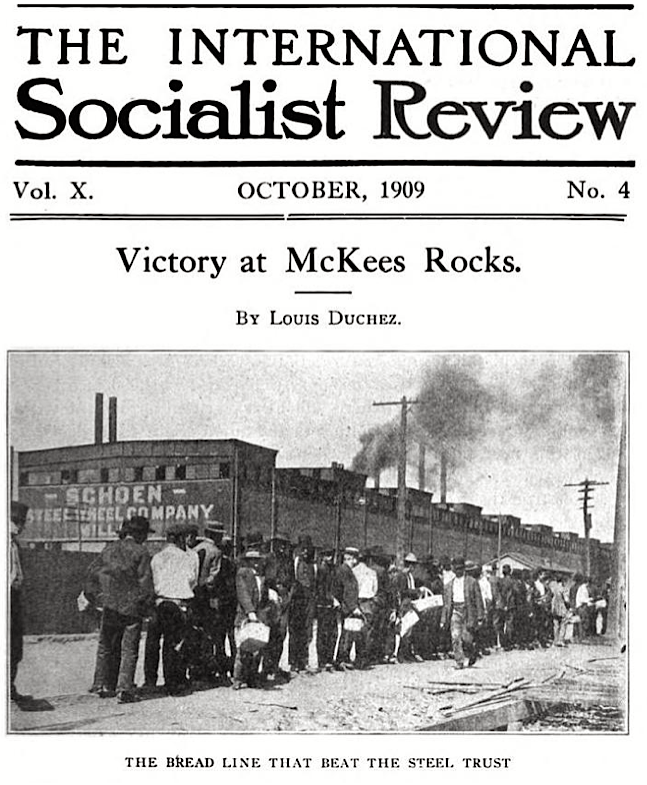
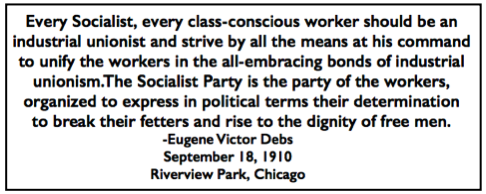
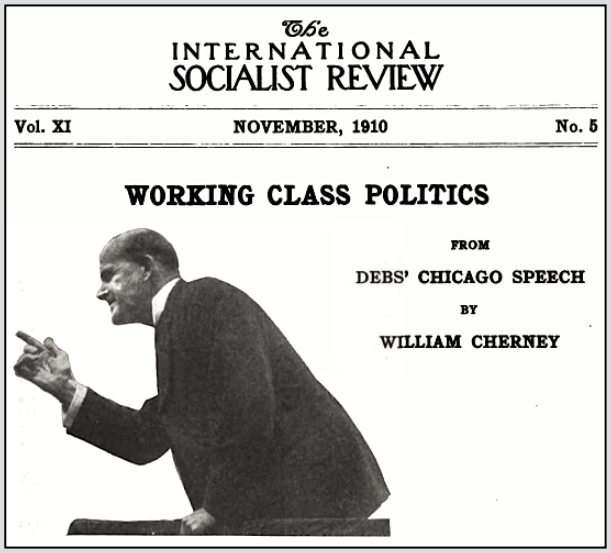
 N this article the writer is not going to give much space to a recitation of the crimes of the capitalist class at McKees Rocks and the other strike points in Pennsylvania. It is unnecessary. The capitalist press has done that more effectively—regardless of the motives that may have prompted them—than he is able to do. The class struggle is a historic fact and the diametrically opposed interests have long ago been proven. Such practices as were exposed during the last few weeks are only the logical result of the capitalist system of society at this stage of working class activity.
 ———-
———-